Setting Aside Michigan Juvenile Adjudications Under Clean Slate Law · Free Case Evaluation · 24/7 Emergency Availability
28+ Years Experience
Expert in Detroit Courts
36th District & Third Circuit Court
Recognized for Excellence in Criminal Defense Representation





Clearing Your Record Under MCL 712A.18e and Michigan’s Clean Slate Law
A juvenile adjudication need not define a young person’s future. Michigan law provides two distinct mechanisms for setting aside juvenile adjudications: the application process under MCL 712A.18e, which allows eligible individuals to petition the court for an order setting aside qualifying adjudications, and the automatic clean slate process under MCL 712A.18t, which sets aside certain adjudications without any application once the statutory waiting period has elapsed. Detroit juvenile record expungement attorney William Maze helps clients and their families navigate both processes, removing the barriers that a juvenile adjudication can create in employment, education, housing, and other vital areas of life.
Michigan’s Clean Slate legislation, which became effective in 2023, significantly expanded the availability of automatic expungement for juvenile adjudications. Under MCL 712A.18t, beginning December 30, 2023, an adjudication is automatically set aside two years after the termination of court supervision or when the person becomes 18 years of age, whichever occurs later, provided the adjudication is not one of the categories excluded by MCL 712A.18t(2). Excluded categories include adjudications for offenses punishable by life imprisonment, specified juvenile violations listed in MCL 712A.2(a)(1)(A)-(I), and a number of serious violent and weapons-related offenses. For those whose adjudications are not automatically set aside, or who wish to set aside additional adjudications beyond the automatic process, the application procedure under MCL 712A.18e provides a parallel pathway.
Under MCL 712A.18e(1), a person may apply to set aside no more than one adjudication that would constitute a felony if committed by an adult and no more than three total adjudications, provided the person has no felony convictions. The application may not be filed until one year after the termination of court supervision under MCL 712A.18e(3). The application process involves submitting a sworn application to the adjudicating court, providing fingerprints to the Department of State Police for a background check, serving copies on the Attorney General and the prosecuting attorney, and appearing at a hearing. The prosecutor and Attorney General have 35 days after service to contest the application. Where the adjudication involved an assaultive crime or serious misdemeanor, the prosecuting attorney must also notify the victim, who has the right to appear and speak at the hearing.
Both the automatic process and the application process result in an order setting aside the adjudication and directing law enforcement agencies and the court to treat the adjudication as if it never occurred, except for purposes of subsequent criminal proceedings. A nonpublic record is maintained by the Department of State Police under MCL 712A.18e(13). Significantly, convictions entered in designated proceedings in the Family Division cannot be set aside under MCL 712A.18e or MCL 712A.18t—a critical reason why the distinction between adjudications and designated convictions matters enormously from the earliest stages of a juvenile case. Contact Attorney Maze today at (313) 792-8800 to determine whether you or your child qualifies for expungement and to begin the process of clearing your record.
Michigan law governing the setting aside of juvenile adjudications is found in MCL 712A.18e and MCL 712A.18t, both of which are expressly referenced by MCR 3.925(F)(1). Together, these provisions establish two complementary pathways—one automatic, one application-based—through which a person who was adjudicated delinquent as a juvenile may clear that record and regain the opportunities that a juvenile adjudication can foreclose.
The automatic set-aside process under MCL 712A.18t took effect December 30, 2023, pursuant to an executive directive that adjusted the statute’s original implementation date. Under this provision, an adjudication is set aside by operation of law, without any filing by the affected person, two years after the termination of court supervision or when the person reaches age 18, whichever occurs later. The automatic process does not apply, however, to adjudications for offenses described in MCL 712A.2(a)(1)(A)-(I) (specified juvenile violations), nor to adjudications or convictions for certain enumerated statutory violations, including MCL 750.82 (felonious assault), MCL 750.136b (child abuse in the first and second degrees), MCL 750.520d (third-degree criminal sexual conduct), and MCL 750.543k (material support of terrorism). Notably, the attorney general and prosecuting attorney are expressly prohibited from contesting the automatic set-aside process under MCL 712A.18t(3).
For adjudications that do not qualify for automatic set-aside, or for individuals who wish to set aside adjudications on an accelerated basis or beyond what the automatic process allows, MCL 712A.18e provides the application-based mechanism. The statute permits a person to apply to set aside a limited number of adjudications—no more than one felony-equivalent and no more than three total—subject to the limitation that the person must have no felony convictions. The application cannot be filed until at least one year after the termination of court supervision. MCL 712A.18e(2) separately excludes from eligibility any adjudication for an offense that would carry a maximum penalty of life imprisonment if committed by an adult, and any conviction entered in a designated proceeding in the Family Division.
The application procedure requires the applicant to submit a sworn written application containing the elements specified in MCL 712A.18e(4)(a)-(g), including a certified record of the adjudication, statements that no other felony convictions exist and no other applications are pending, and consent to maintenance of a nonpublic record by the Department of State Police. The applicant must also submit two complete sets of fingerprints to the Department of State Police under MCL 712A.18e(6), which conducts a records check and reports to the court before the hearing is held. A copy of the application must be served on the Attorney General and the prosecuting attorney, each of whom has 35 days within which to contest the application. Where the adjudication involved an assaultive crime or serious misdemeanor as defined by reference to MCL 770.9a and MCL 780.796a, the prosecutor must notify the victim, who is entitled to appear and make a statement at the hearing. A successful order setting aside the adjudication creates a nonpublic record maintained by the Department of State Police under MCL 712A.18e(13), ensuring the adjudication is no longer accessible to the general public while preserving law enforcement access for specified purposes.
As a Detroit criminal defense attorney, I provide specialized expertise in Detroit's court systems. I understand the specific procedures, judges, and prosecutors in Detroit courts, giving my clients a distinct advantage in their criminal defense cases.
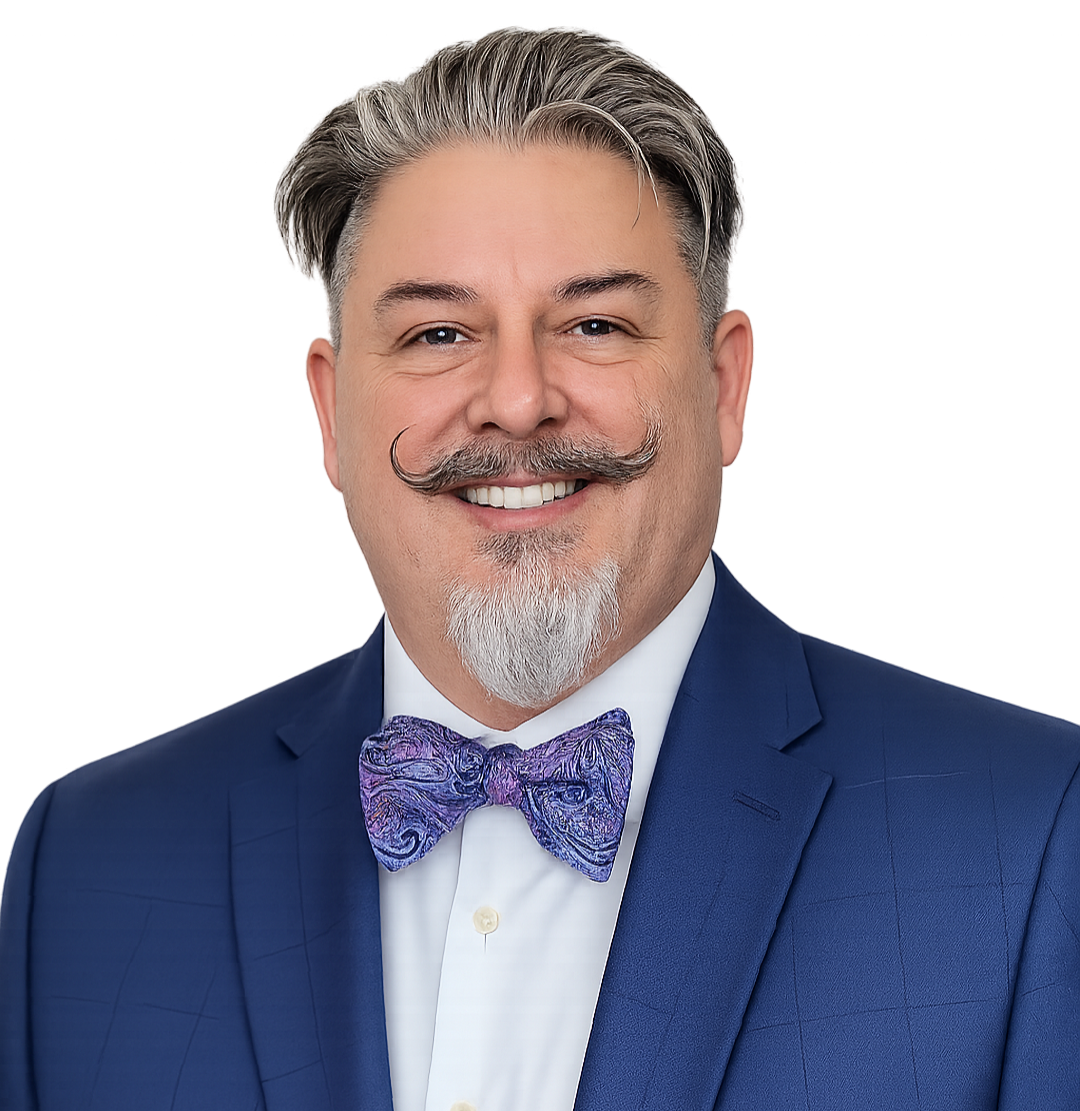
Detroit Criminal Defense Attorney
William Maze is an established Detroit Michigan attorney with nearly 28 years of criminal defense experience. He has represented thousands of satisfied clients across Michigan and maintains a national reputation as one of the leading criminal defense attorneys in the country.
Attorney Maze is a qualified expert witness in Standardized Field Sobriety Testing (SFST) and breath alcohol testing. His expertise includes:
Subscribe to @DUIMAZE for comprehensive criminal defense videos, case breakdowns, and legal strategy discussions.
If you are facing criminal charges, call William Maze today to schedule an appointment to review your case. Available 24/7 for emergencies.
Expert Criminal Defense Representation in Detroit's Judicial System
Primary Court for Detroit Criminal Cases
421 Madison Street, Detroit, MI 48226
(313) 965-2200
Felony Cases & Appeals from Detroit
5301 Russell Street, Detroit, MI 48211
(313) 224-5261
As a criminal defense attorney in Detroit, I provide specialized representation tailored to Detroit's unique legal landscape. For many years, my downtown Detroit office was located in the Ford Building on the same floor where Clarence Darrow mounted his famous defense of Dr. Ossian Sweet. In the famous 1925 Sweet Trials, Darrow successfully argued against racial prejudice in a murder case, asserting a Black family's right to live in a white neighborhood, a landmark civil rights victory. Darrow took the case after the Sweets were attacked in their new Detroit home, leading to a deadly confrontation and a trial that highlighted racial tensions in Detroit.
Each court has its own procedures, judges, and local rules. My extensive experience with Detroit's court system includes:
I provide criminal defense services throughout Detroit including:
If you're facing criminal charges in Detroit or Wayne County, contact my office today at (313) 792-8800 for a free, confidential consultation.
Get Expert Legal Advice for Your Detroit Criminal Case
Facing criminal charges in Detroit can be overwhelming. Contact me today for a free, confidential consultation at my Detroit office.
24/7 Emergency: (313) 792-8800
Office Hours: Mon-Fri 9am-5pm
Weekend/Evening: Appointments Available