Aggressive Representation for Minors Facing Delinquency Charges in Wayne County · Free Case Evaluation · 24/7 Emergency Availability
28+ Years Experience
Expert in Detroit Courts
36th District & Third Circuit Court
Recognized for Excellence in Criminal Defense Representation





Protecting Minors’ Rights at Every Stage of Wayne County Delinquency Proceedings
A juvenile delinquency charge in Michigan is not simply a minor matter that will disappear on its own. Michigan’s Juvenile Code provides a sophisticated framework of courts, hearings, and dispositions that can have lasting consequences for a young person’s education, employment, and freedom. Detroit juvenile criminal defense attorney William Maze represents minors throughout Wayne County who are accused of delinquency offenses—from misdemeanor-equivalent conduct to serious felony-level allegations that may trigger adult prosecution. Attorney Maze provides the strategic, aggressive defense that juveniles and their families need from the earliest stages of a case.
The Family Division of Circuit Court has exclusive original jurisdiction over persons under the age of 18 accused of violating a law or ordinance, pursuant to MCL 712A.2(a)(1). This jurisdiction is not unlimited, however. Michigan law establishes several pathways that can remove a case from the rehabilitative framework of the Family Division and place a juvenile in adult court. When a minor is accused of a “specified juvenile violation” as defined in MCL 712A.2(a)(1)(A)-(I), the prosecutor may bypass the Family Division entirely and charge the juvenile as an adult under the automatic waiver statute. For other serious felony-level offenses involving 14- to 17-year-olds, the Family Division may waive jurisdiction through a traditional waiver proceeding under MCL 712A.4, or the prosecutor may seek a designated proceeding in which the minor is tried in Family Division but may be sentenced as an adult. Understanding which of these tracks applies to your child’s case is the first critical step in building an effective defense.
Regardless of the procedural track, Michigan law guarantees juveniles core constitutional and statutory protections. A minor has the right to remain silent and the right to counsel, and any statement obtained in violation of these rights may be challenged and suppressed. The right to a trial by judge or jury, the right to confront witnesses, and the requirement that guilt be proven beyond a reasonable doubt all apply in formal delinquency proceedings. Attorney Maze scrutinizes every aspect of a case—from the legality of the police stop or search to the voluntariness of any admission or confession—to ensure that your child’s constitutional rights are fully protected at every stage.
Early intervention is the single most important factor in achieving a favorable outcome in a juvenile case. Before a petition is authorized and the formal calendar begins, there are often opportunities to divert the matter through a consent calendar program, negotiate with the prosecutor, or present mitigating information to the court. Once a petition is authorized and the case moves to the formal calendar, the stakes rise significantly. Attorney Maze has decades of experience in Detroit’s Wayne County courts and knows how to navigate the Family Division’s processes, advocate for diversion or reduced charges, and, where necessary, contest the government’s evidence at an adjudicatory hearing. Contact our office today at (313) 792-8800 for a confidential case review.
The structure of Michigan’s juvenile justice system creates a series of critical decision points where the quality of legal representation directly affects a young person’s future. The Family Division of Circuit Court, operating under the Juvenile Code (MCL 712A.1 et seq.), assumed jurisdiction over delinquency proceedings effective January 1, 1998, when it replaced the former juvenile division of probate court under MCL 600.1021(1)(e). Within this system, the scope of the court’s authority depends upon the age of the juvenile and the nature of the alleged offense.
For juveniles under age 18 accused of violations of law, MCL 712A.2(a)(1) establishes the Family Division’s exclusive original jurisdiction. However, this exclusivity yields when the prosecutor invokes the automatic waiver provisions applicable to “specified juvenile violations”—a defined category of the most serious offenses listed in MCL 712A.2(a)(1)(A)-(I), including certain homicide, sexual assault, and armed robbery charges. In automatic waiver cases, the circuit court of general criminal jurisdiction presides from the outset, and a conviction requires adult sentencing. For the twelve most serious specified juvenile violations enumerated in the benchbook, an adult sentence following conviction is mandatory.
Where the automatic waiver statute does not apply, the Family Division retains jurisdiction but may be asked to waive it through traditional waiver proceedings under MCL 712A.4 for juveniles aged 14 through 17 accused of felony-equivalent conduct. People v Veling, 443 Mich 23 (1993), confirmed that the Family Division has jurisdiction over a juvenile charged with a specified juvenile violation only if the prosecutor files a petition in the Family Division rather than in the court of general criminal jurisdiction. This means the prosecutor’s charging decision is itself a critical strategic moment in every case involving a serious offense.
In designated proceedings under MCL 712A.2d, the Family Division tries the juvenile under its own procedures but may impose an adult sentence, including commitment to the Department of Corrections. A juvenile convicted in a prosecutor-designated case may receive a juvenile disposition, an adult sentence, or a delayed sentence with probation. The court retains jurisdiction for periodic review to determine whether sentence imposition is warranted. This blended structure makes it essential to have defense counsel who understands the full range of dispositional options and can advocate effectively at the sentencing stage.
Throughout all of these proceedings, defense counsel must remain vigilant about the protections afforded by the Juvenile Code and the Michigan and United States Constitutions. MCL 712A.15(3) expressly provides that statements obtained from a juvenile during a detention screening cannot be used against the juvenile at an adjudicatory hearing. The United States Supreme Court’s decision in Schall v Martin, 467 US 253 (1984), upheld the constitutionality of preventive pretrial detention of juveniles, but Michigan courts have placed specific procedural safeguards around that authority. An experienced juvenile defense attorney challenges detention at every available hearing and uses every lawful means to secure the minor’s release into the least restrictive environment while the case is pending.
As a Detroit criminal defense attorney, I provide specialized expertise in Detroit's court systems. I understand the specific procedures, judges, and prosecutors in Detroit courts, giving my clients a distinct advantage in their criminal defense cases.
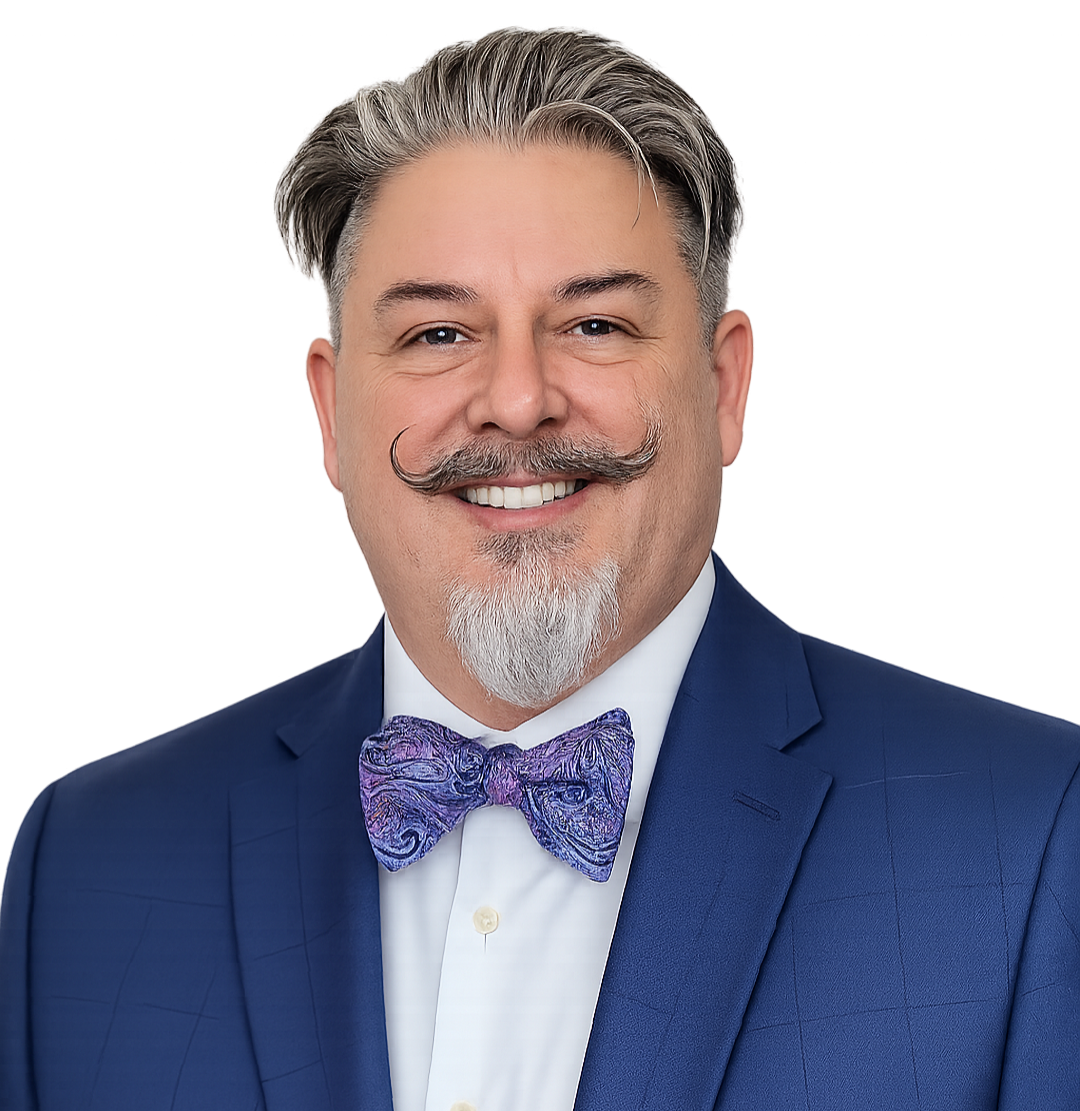
Detroit Criminal Defense Attorney
William Maze is an established Detroit Michigan attorney with nearly 28 years of criminal defense experience. He has represented thousands of satisfied clients across Michigan and maintains a national reputation as one of the leading criminal defense attorneys in the country.
Attorney Maze is a qualified expert witness in Standardized Field Sobriety Testing (SFST) and breath alcohol testing. His expertise includes:
Subscribe to @DUIMAZE for comprehensive criminal defense videos, case breakdowns, and legal strategy discussions.
If you are facing criminal charges, call William Maze today to schedule an appointment to review your case. Available 24/7 for emergencies.
Expert Criminal Defense Representation in Detroit's Judicial System
Primary Court for Detroit Criminal Cases
421 Madison Street, Detroit, MI 48226
(313) 965-2200
Felony Cases & Appeals from Detroit
5301 Russell Street, Detroit, MI 48211
(313) 224-5261
As a criminal defense attorney in Detroit, I provide specialized representation tailored to Detroit's unique legal landscape. For many years, my downtown Detroit office was located in the Ford Building on the same floor where Clarence Darrow mounted his famous defense of Dr. Ossian Sweet. In the famous 1925 Sweet Trials, Darrow successfully argued against racial prejudice in a murder case, asserting a Black family's right to live in a white neighborhood, a landmark civil rights victory. Darrow took the case after the Sweets were attacked in their new Detroit home, leading to a deadly confrontation and a trial that highlighted racial tensions in Detroit.
Each court has its own procedures, judges, and local rules. My extensive experience with Detroit's court system includes:
I provide criminal defense services throughout Detroit including:
If you're facing criminal charges in Detroit or Wayne County, contact my office today at (313) 792-8800 for a free, confidential consultation.
Get Expert Legal Advice for Your Detroit Criminal Case
Facing criminal charges in Detroit can be overwhelming. Contact me today for a free, confidential consultation at my Detroit office.
24/7 Emergency: (313) 792-8800
Office Hours: Mon-Fri 9am-5pm
Weekend/Evening: Appointments Available