Aggressive Defense Strategies for Federal Criminal Defense in Detroit · Free Case Evaluation · 24/7 Emergency Availability
28+ Years Experience
Expert in Detroit Courts
36th District & Third Circuit Court
Recognized for Excellence in Criminal Defense Representation





Aggressive Representation Against Federal Charges in the Eastern District of Michigan
Federal criminal cases differ from Michigan state prosecutions in almost every material respect. Federal investigations are typically conducted by specialized agencies — the FBI, DEA, ATF, IRS Criminal Investigation, Homeland Security Investigations, or the Secret Service — that bring sophisticated investigative capabilities and virtually unlimited resources to bear over the course of months or years before charges are filed. By the time a federal grand jury returns an indictment, the government has usually assembled wiretap recordings, cooperating witness testimony, financial records, surveillance footage, and forensic evidence sufficient to secure a conviction. This investigative disparity means that federal defense must begin as early as possible — ideally at the first indication of federal interest, before any indictment is returned.
The Federal Rules of Criminal Procedure govern all aspects of the federal criminal process, from initial appearance through sentencing. The federal Speedy Trial Act, 18 USC § 3161, imposes tight deadlines on the government and the defense, requiring trial to commence within seventy days of indictment or initial appearance (whichever is later), with specific exclusions for pretrial motions and other delays. Federal discovery is governed by Rule 16 and the government's constitutional obligations under Brady v Maryland, 373 US 83 (1963), Giglio v United States, 405 US 150 (1972), and the Jencks Act, 18 USC § 3500. Federal prosecutors have significant disclosure obligations that exceed those of state prosecutors in Michigan, and vigorous enforcement of these obligations through pretrial motions is a fundamental component of federal defense strategy.
Federal pretrial motions practice includes motions to suppress evidence obtained through unlawful searches or seizures under the Fourth Amendment, motions to suppress statements obtained in violation of Miranda v Arizona, 384 US 436 (1966), motions to dismiss the indictment for constitutional violations or insufficient evidence, and motions in limine to exclude prejudicial evidence at trial. Federal district court judges handle these motions with a level of procedural formality and analytical rigor that exceeds what is typical in state court. Briefing schedules are strict, evidentiary hearings are conducted under the Federal Rules of Evidence, and written opinions are often issued — creating a robust record for appeal. Attorney Maze approaches federal pretrial practice with the thoroughness it demands, filing comprehensive motions that preserve every available issue for appellate review.
Federal sentencing is its own discipline within federal criminal practice. The United States Sentencing Guidelines, which organize sentences around an offense level and criminal history grid, require detailed calculation that accounts for drug quantity, role in the offense, obstruction of justice, acceptance of responsibility, and dozens of specific offense characteristics. A one-level difference in the offense level can mean months or years of additional imprisonment. Attorney Maze reviews every aspect of the Presentence Investigation Report submitted by the U.S. Probation Office, objects to any factual or legal errors, and prepares comprehensive sentencing memoranda that present mitigating evidence and legal arguments in support of the lowest appropriate sentence under both the Guidelines and the factors of 18 USC § 3553(a).
The National Association of Criminal Defense Lawyers has been the leading voice for the constitutional rights of federal criminal defendants for decades. NACDL's federal criminal defense resources — including its Federal Criminal Defense Practice guides, Sentencing Guidelines manuals, and amicus briefs in landmark Supreme Court cases — reflect the organization's commitment to ensuring that federal defendants receive the full protections of the Constitution and the Sixth Amendment right to effective assistance of counsel. NACDL has been particularly active in challenging the government's use of broad conspiracy charges, mandatory minimum sentencing, and expansive forfeiture statutes that it argues have distorted federal criminal justice.
The federal conspiracy statute, 18 USC § 371, and the Racketeer Influenced and Corrupt Organizations Act (RICO), 18 USC §§ 1961-1968, are frequently used to sweep in defendants who played minor roles in an alleged criminal enterprise. The conspiracy doctrine's "Pinkerton liability" theory — derived from Pinkerton v United States, 328 US 640 (1946) — can hold a peripheral defendant responsible for the substantive offenses of all co-conspirators if those offenses were reasonably foreseeable and in furtherance of the conspiracy. NACDL has argued extensively that Pinkerton liability violates due process by punishing defendants for the conduct of others without individualized proof of culpability. Defense counsel must attack the scope of the alleged conspiracy and the defendant's role in it from the earliest stages of the case.
Federal cooperating witness testimony is a central feature of most complex federal prosecutions. The government's use of informants and cooperators — individuals who have agreed to testify in exchange for sentencing leniency — creates significant reliability concerns that competent defense counsel must address through rigorous cross-examination and pretrial investigation. The Supreme Court's decisions in Crawford v Washington, 541 US 36 (2004), and its progeny reinvigorated the Confrontation Clause as a tool for excluding unreliable hearsay in federal cases, and the Federal Rules of Evidence's hearsay provisions provide additional grounds for challenging cooperator testimony. NACDL has published extensive guidance on cross-examining government cooperators and has advocated for mandatory corroboration requirements for cooperator testimony in federal court.
Federal asset forfeiture — the government's seizure of property alleged to be the proceeds or instruments of crime — represents a significant ancillary consequence of federal prosecution that receives insufficient attention from defense counsel. Under 21 USC § 853, the government may seek forfeiture of all property derived from or used to facilitate a drug trafficking offense. The Money Laundering Control Act, 18 USC § 982, permits forfeiture of assets involved in money laundering. The government may also seek substitute asset forfeiture if the directly forfeitable assets are unavailable. NACDL has been a forceful critic of federal civil forfeiture practices and has advocated for reforms that protect innocent third parties whose property is entangled in criminal allegations. Attorney Maze addresses forfeiture issues in every federal case where asset seizure is a component of the government's case.
As a Detroit criminal defense attorney, I provide specialized expertise in Detroit's court systems. I understand the specific procedures, judges, and prosecutors in Detroit courts, giving my clients a distinct advantage in their criminal defense cases.
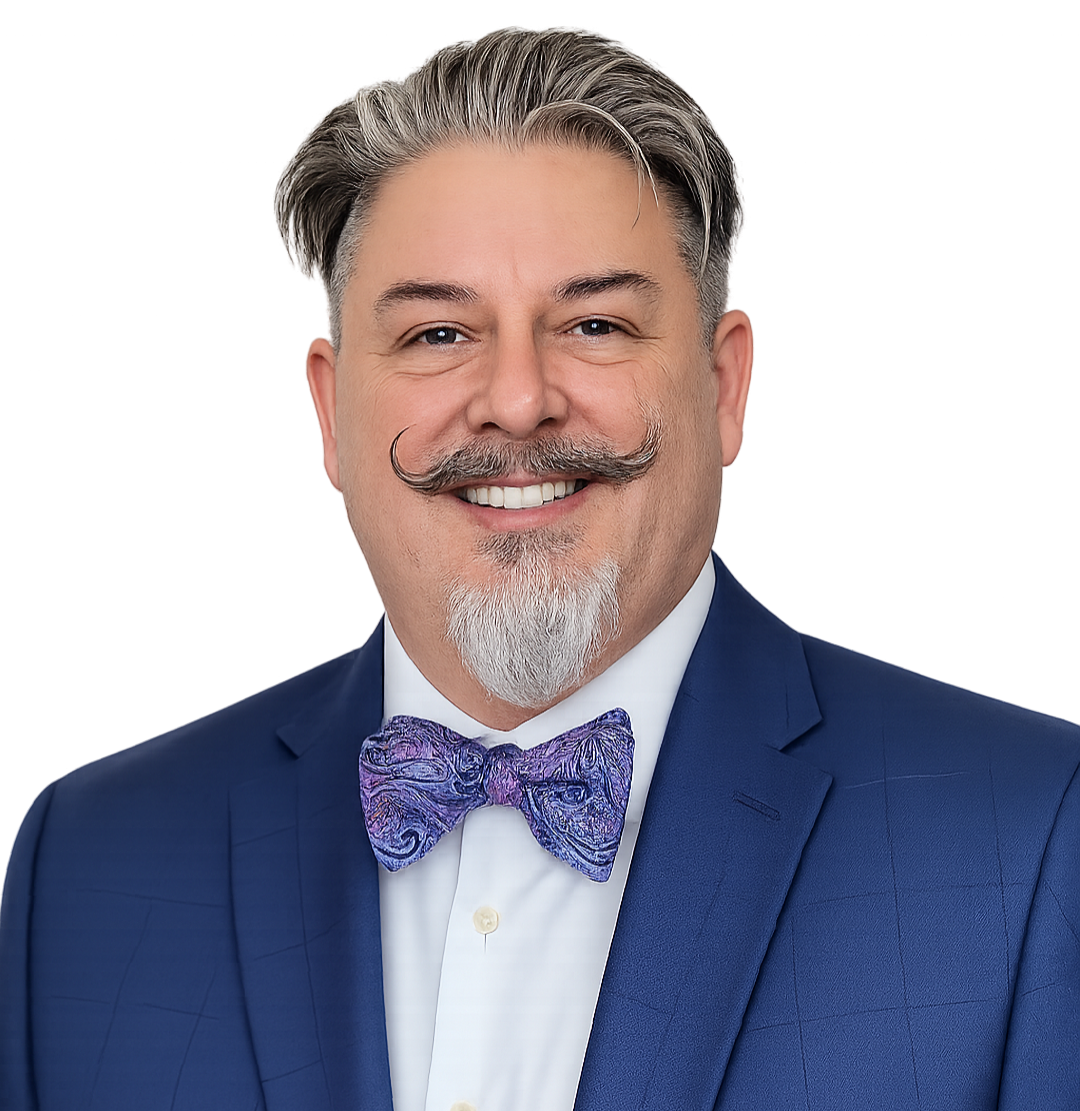
Detroit Criminal Defense Attorney
William Maze is an established Detroit Michigan attorney with nearly 28 years of criminal defense experience. He has represented thousands of satisfied clients across Michigan and maintains a national reputation as one of the leading criminal defense attorneys in the country.
Attorney Maze is a qualified expert witness in Standardized Field Sobriety Testing (SFST) and breath alcohol testing. His expertise includes:
Subscribe to @DUIMAZE for comprehensive criminal defense videos, case breakdowns, and legal strategy discussions.
If you are facing criminal charges, call William Maze today to schedule an appointment to review your case. Available 24/7 for emergencies.
Expert Criminal Defense Representation in Detroit's Judicial System
Primary Court for Detroit Criminal Cases
421 Madison Street, Detroit, MI 48226
(313) 965-2200
Felony Cases & Appeals from Detroit
5301 Russell Street, Detroit, MI 48211
(313) 224-5261
As a criminal defense attorney in Detroit, I provide specialized representation tailored to Detroit's unique legal landscape. For many years, my downtown Detroit office was located in the Ford Building on the same floor where Clarence Darrow mounted his famous defense of Dr. Ossian Sweet. In the famous 1925 Sweet Trials, Darrow successfully argued against racial prejudice in a murder case, asserting a Black family's right to live in a white neighborhood, a landmark civil rights victory. Darrow took the case after the Sweets were attacked in their new Detroit home, leading to a deadly confrontation and a trial that highlighted racial tensions in Detroit.
Each court has its own procedures, judges, and local rules. My extensive experience with Detroit's court system includes:
I provide criminal defense services throughout Detroit including:
If you're facing criminal charges in Detroit or Wayne County, contact my office today at (313) 792-8800 for a free, confidential consultation.
Get Expert Legal Advice for Your Detroit Criminal Case
Facing criminal charges in Detroit can be overwhelming. Contact me today for a free, confidential consultation at my Detroit office.
24/7 Emergency: (313) 792-8800
Office Hours: Mon-Fri 9am-5pm
Weekend/Evening: Appointments Available