Aggressive Defense Strategies for Grand Jury Subpoena Defense · Free Case Evaluation · 24/7 Emergency Availability
28+ Years Experience
Expert in Detroit Courts
36th District & Third Circuit Court
Recognized for Excellence in Criminal Defense Representation





Protecting Your Rights as a Witness or Target Before a Michigan Grand Jury
A grand jury subpoena is a legal command to appear before a grand jury to testify, to produce documents, or both. In Michigan, criminal prosecutions may be initiated through either the conventional complaint-information process or through grand jury indictment under MCL 767.1 et seq. In People v Glass, 464 Mich 266 (2001), the Michigan Supreme Court confirmed that there is no state constitutional right to grand jury indictment and that the grand jury operates as a procedural alternative to the preliminary examination process. Grand jury proceedings are secret by their nature—witnesses are sworn to confidentiality under the oath of MCL 767.9, the proceedings are not open to the public, and even the existence of a grand jury investigation is typically not publicly acknowledged until an indictment is returned.
The first and most critical question for any person served with a grand jury subpoena is the distinction between a "witness," a "subject," and a "target." A witness is a person who has relevant knowledge about the subject matter of the investigation but is not suspected of criminal conduct. A subject is a person whose conduct is within the scope of the grand jury investigation. A target is a person against whom the prosecutor has substantial evidence linking that person to the commission of a crime. These categories exist on a spectrum, and a person's status can change during the course of the investigation. The grand jury itself cannot provide reliable guidance on which category the subpoenaed person falls into—only an experienced defense attorney who has thoroughly assessed the investigation can make that evaluation.
Michigan law expressly guarantees the right to have an attorney present in the grand jury room during testimony. MCR 6.005(I)(1) provides: "A witness called before a grand jury or a grand juror is entitled to have a lawyer present in the hearing room while the witness gives testimony." The attorney may not participate actively in the grand jury proceedings but may advise the witness at any time during questioning. The prosecutor is required to ensure that witnesses are informed of this right in the subpoena itself and immediately before examination. This protection is of paramount importance: a witness who enters the grand jury room without counsel is far more likely to provide testimony that, while technically true, can be used against that witness or against others in ways that experienced counsel would have anticipated and addressed.
Michigan's investigative subpoena statutes, MCL 767A.2 through MCL 767A.6, provide a parallel mechanism through which prosecutors can compel testimony and document production without convening a full grand jury. Under MCL 767A.2, a prosecuting attorney may petition the circuit court to authorize investigative subpoenas when there is reasonable cause to believe a felony has been committed and that the person to be subpoenaed may have relevant knowledge. The investigative subpoena must include a statement that the subpoenaed person may have legal counsel present at all times during questioning, MCL 767A.4(g), and the witness must be advised of their Fifth Amendment rights. A person who believes they should not be required to comply with an investigative subpoena may file an objection under MCL 767A.6(1) and seek a judicial determination—a critical protection that must be exercised before the examination.
Michigan law provides for several distinct types of grand jury. The citizen grand jury, drawn from the community under MCL 767.7, is summoned to hear evidence and determine whether probable cause exists to indict an accused person. The one-man grand jury, authorized by MCL 767.3 and MCL 767.4, operates through a circuit court judge who conducts an independent investigation with authority to subpoena witnesses and issue arrest warrants; the Michigan Supreme Court's decision in People v Peeler, 509 Mich 381 (2022), significantly cabined the one-man grand jury's authority, holding that a one-man grand jury cannot issue binding indictments in criminal proceedings and that an accused who is the subject of a one-man grand jury investigation is entitled to a preliminary examination before trial. The Court of Appeals's subsequent decision in People v Robinson, ___ Mich App ___ (2024), confirmed that an erroneous one-man grand jury indictment does not deprive the circuit court of subject-matter jurisdiction, providing a procedural pathway for affected defendants to challenge their prosecutions.
The Fifth Amendment privilege against self-incrimination is available to any grand jury witness who has reasonable cause to apprehend danger from a direct answer to the question asked. The privilege is not limited to questions that would themselves constitute an admission of guilt—it extends to any question whose truthful answer might provide a link in the chain of evidence needed to prosecute the witness. Counselman v Hitchcock, 142 US 547 (1892). In the grand jury context, a witness who has been granted use immunity under MCL 767.6 may be compelled to testify over a Fifth Amendment objection, because use immunity prevents the government from using the immunized testimony against the witness in a subsequent prosecution. Defense counsel must evaluate the scope of any immunity grant and ensure that its terms are sufficient to protect the witness before advising compliance with a compelled immunity order.
Grand jury witnesses are entitled to the appointment of counsel at public expense if they are financially unable to retain a lawyer. MCR 6.005(I)(1) provides that upon request, the chief judge in the circuit court in which the grand jury is convened will refer an indigent witness to the local indigent criminal defense system for appointment of counsel. Similarly, MCL 767A.4(g) requires that investigative subpoenas include a statement that witnesses may have legal counsel present at all times during questioning. The prosecutor assisting the grand jury is responsible for ensuring that witnesses are informed of the right to counsel by written notice accompanying the subpoena and by personal advice immediately before the examination.
The Michigan Supreme Court has held that the exclusionary rule does not apply to statutory violations of the investigative subpoena statutes, MCL 767A.1 et seq. People v Earls, 477 Mich 1119 (2007). This means that evidence gathered through a defective investigative subpoena may not be suppressed on statutory grounds alone—a significant limitation that underscores the importance of challenging the subpoena before complying rather than testifying and seeking suppression afterward. In People v Seals, 285 Mich App 1 (2009), the Court of Appeals held that a defendant who failed to object to an investigative subpoena under MCL 767A.6(1) could not later characterize his responsive testimony as involuntary. The lesson is clear: the time to challenge a subpoena is before testimony is given.
Grand jury proceedings require careful strategic analysis by defense counsel, including consideration of whether assertion of the Fifth Amendment is advisable, whether a motion to quash or limit the subpoena is appropriate, whether any immunity arrangement serves the client's interests, and whether preemptive contact with the prosecutor can affect the client's exposure. Attorney William Maze represents both witnesses and targets in grand jury proceedings in state court throughout Wayne County and in federal court in the Eastern District of Michigan, and is experienced in navigating all aspects of the grand jury process from first subpoena through return of indictment or declination of prosecution.
As a Detroit criminal defense attorney, I provide specialized expertise in Detroit's court systems. I understand the specific procedures, judges, and prosecutors in Detroit courts, giving my clients a distinct advantage in their criminal defense cases.
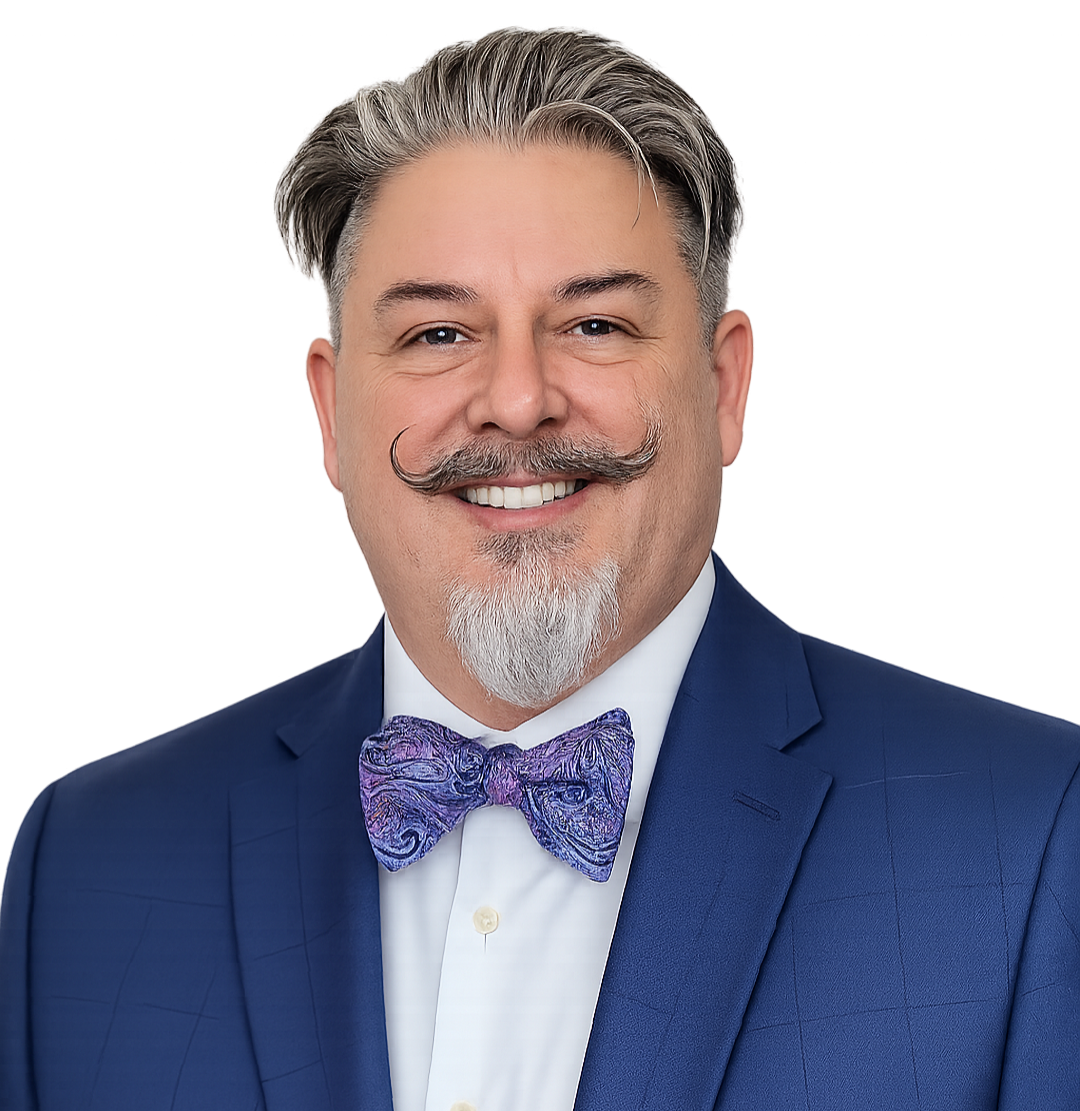
Detroit Criminal Defense Attorney
William Maze is an established Detroit Michigan attorney with nearly 28 years of criminal defense experience. He has represented thousands of satisfied clients across Michigan and maintains a national reputation as one of the leading criminal defense attorneys in the country.
Attorney Maze is a qualified expert witness in Standardized Field Sobriety Testing (SFST) and breath alcohol testing. His expertise includes:
Subscribe to @DUIMAZE for comprehensive criminal defense videos, case breakdowns, and legal strategy discussions.
If you are facing criminal charges, call William Maze today to schedule an appointment to review your case. Available 24/7 for emergencies.
Expert Criminal Defense Representation in Detroit's Judicial System
Primary Court for Detroit Criminal Cases
421 Madison Street, Detroit, MI 48226
(313) 965-2200
Felony Cases & Appeals from Detroit
5301 Russell Street, Detroit, MI 48211
(313) 224-5261
As a criminal defense attorney in Detroit, I provide specialized representation tailored to Detroit's unique legal landscape. For many years, my downtown Detroit office was located in the Ford Building on the same floor where Clarence Darrow mounted his famous defense of Dr. Ossian Sweet. In the famous 1925 Sweet Trials, Darrow successfully argued against racial prejudice in a murder case, asserting a Black family's right to live in a white neighborhood, a landmark civil rights victory. Darrow took the case after the Sweets were attacked in their new Detroit home, leading to a deadly confrontation and a trial that highlighted racial tensions in Detroit.
Each court has its own procedures, judges, and local rules. My extensive experience with Detroit's court system includes:
I provide criminal defense services throughout Detroit including:
If you're facing criminal charges in Detroit or Wayne County, contact my office today at (313) 792-8800 for a free, confidential consultation.
Get Expert Legal Advice for Your Detroit Criminal Case
Facing criminal charges in Detroit can be overwhelming. Contact me today for a free, confidential consultation at my Detroit office.
24/7 Emergency: (313) 792-8800
Office Hours: Mon-Fri 9am-5pm
Weekend/Evening: Appointments Available