Aggressive Defense Strategies for Criminal Defense for Non-Citizens & Immigrants · Free Case Evaluation · 24/7 Emergency Availability
28+ Years Experience
Expert in Detroit Courts
36th District & Third Circuit Court
Recognized for Excellence in Criminal Defense Representation





Understanding Immigration Consequences Before Any Plea Is Entered
Any person who is not a United States citizen — whether a lawful permanent resident (green card holder), a temporary visa holder, a DACA recipient, or an undocumented individual — faces a dual system of jeopardy when charged with a crime in Michigan. The state criminal proceeding determines guilt or innocence and imposes sentences under Michigan law. But federal immigration law simultaneously classifies that same conduct through an entirely separate framework, imposing consequences that the state criminal court has no power to waive, mitigate, or set aside. Attorney William Maze has been defending non-citizens in Wayne County for over 28 years and routinely advises clients on the specific immigration consequences of every available disposition before any decision is made.
The immigration consequences of criminal charges turn critically on the specific charge to which a defendant pleads, the sentence imposed, and the procedural posture of the case. A conviction for a crime involving moral turpitude (CIMT) — a legal term that encompasses offenses involving fraud, dishonesty, intentional harm, or vile conduct — can render an LPR deportable under INA § 1227(a)(2)(A)(i) if the offense was committed within five years of admission and carried a potential sentence of one year or more. Aggravated felony convictions, broadly defined under INA § 1101(a)(43), result in near-absolute deportability, elimination of most forms of relief, and permanent bars to future admission. Even drug-related offenses that would ordinarily qualify for diversion under Michigan law may constitute deportable controlled substance violations under 8 USC § 1227(a)(2)(B).
An experienced criminal defense attorney representing a non-citizen must evaluate every disposition option through this immigration lens. In many cases, it is possible to negotiate a plea to a charge that is categorically not deportable — for example, by pleading to a disorderly conduct or malicious destruction charge rather than a theft or fraud charge — while still achieving an acceptable outcome from the state prosecution's perspective. In other cases, the structure of the sentence matters as much as the charge itself: under the "aggravated felony" definition, a theft conviction becomes a deportable offense if a sentence of one year or more is imposed, but remains non-deportable if the sentence is 364 days or fewer. These distinctions require meticulous negotiation by counsel with immigration expertise or counsel who works in coordination with immigration specialists.
Attorney Maze's office also advises non-citizen clients on the interaction between Michigan's diversion and deferred sentence programs and federal immigration law. The Michigan Holmes Youthful Trainee Act, delayed sentences, and various substance abuse diversion programs may avoid a conviction record for state purposes but may still constitute a "conviction" under INA § 101(a)(48)(A) if the defendant entered an admission of guilt. Navigating these distinctions requires a detailed case-by-case analysis. If you are a non-citizen who has been charged with any crime in Michigan, contact Attorney Maze immediately before entering any plea or accepting any disposition offer.
The United States Supreme Court fundamentally reshaped the obligations of criminal defense counsel in cases involving non-citizen defendants in Padilla v Kentucky, 559 US 356 (2010). In that case, the Court held that defense counsel's failure to advise a lawful permanent resident that his drug trafficking plea would make deportation "virtually mandatory" constituted ineffective assistance of counsel under Strickland v Washington, 466 US 668 (1984). Justice Stevens, writing for the majority, observed that deportation is an integral part — indeed, sometimes the most important part — of the penalty that may be imposed on non-citizen defendants. The NACDL filed an amicus brief in Padilla urging the Court to recognize the Sixth Amendment obligation, and has since published a comprehensive guide on immigration consequences of criminal convictions to assist defense attorneys in meeting their post-Padilla obligations.
Following Padilla, defense attorneys must not merely warn their non-citizen clients that a plea "might" have immigration consequences — when the law is clear that a particular plea will result in deportation, counsel must specifically advise the client of that certainty. The Sixth Circuit, which covers Michigan, has recognized the Padilla obligation and applied it to a range of criminal dispositions in cases where non-citizen defendants were not properly counseled before entering guilty pleas. In United States v Urias-Marrufo, 744 F3d 361 (5th Cir 2014), the court reinforced that accurate immigration advice is not optional — it is constitutionally mandated.
The INA provides limited forms of relief for non-citizens who are removable as a result of criminal convictions. Cancellation of removal under INA § 240A(a) is available to LPRs who have been permanent residents for five years, have resided continuously in the United States for seven years, and have not been convicted of an aggravated felony. However, the "stop-time rule" of 8 USC § 1229b(d)(1) terminates the accrual of continuous residence when the non-citizen commits an offense that renders them inadmissible or removable — meaning that an arrest and conviction can simultaneously destroy eligibility for the very relief that could prevent removal. This statutory trap underscores why preventing a disqualifying conviction through skilled criminal defense is far superior to seeking post-conviction immigration relief.
NACDL's practice resources emphasize that every criminal defense attorney with non-citizen clients must maintain proficiency in the basic categories of immigration consequences: CIMTs, aggravated felonies, controlled substance offenses, firearms offenses, and domestic violence offenses. Attorney Maze integrates this analysis into every Wayne County criminal defense representation where immigration status is at issue, providing clients with the informed and comprehensive defense the Constitution requires.
As a Detroit criminal defense attorney, I provide specialized expertise in Detroit's court systems. I understand the specific procedures, judges, and prosecutors in Detroit courts, giving my clients a distinct advantage in their criminal defense cases.
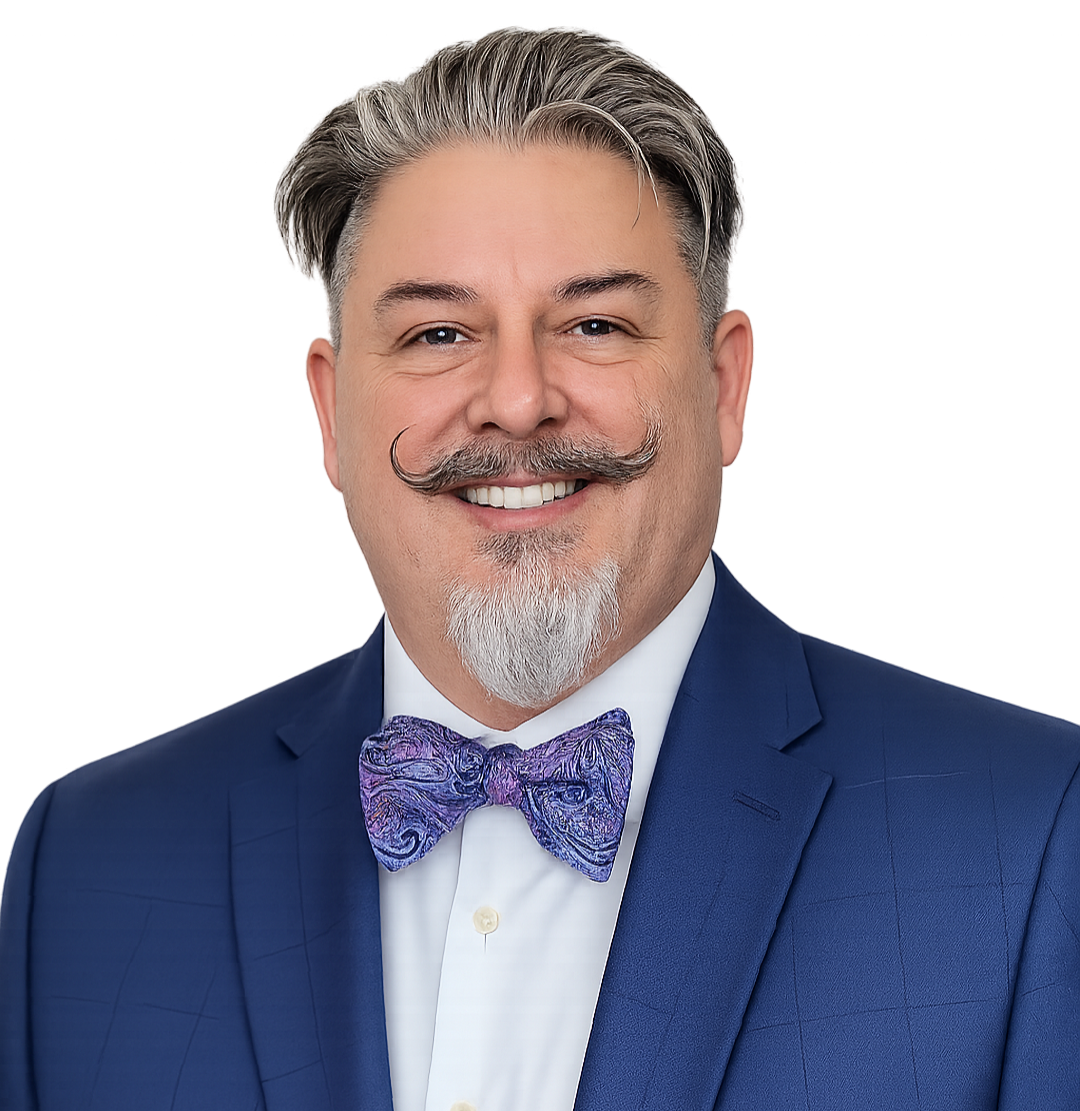
Detroit Criminal Defense Attorney
William Maze is an established Detroit Michigan attorney with nearly 28 years of criminal defense experience. He has represented thousands of satisfied clients across Michigan and maintains a national reputation as one of the leading criminal defense attorneys in the country.
Attorney Maze is a qualified expert witness in Standardized Field Sobriety Testing (SFST) and breath alcohol testing. His expertise includes:
Subscribe to @DUIMAZE for comprehensive criminal defense videos, case breakdowns, and legal strategy discussions.
If you are facing criminal charges, call William Maze today to schedule an appointment to review your case. Available 24/7 for emergencies.
Expert Criminal Defense Representation in Detroit's Judicial System
Primary Court for Detroit Criminal Cases
421 Madison Street, Detroit, MI 48226
(313) 965-2200
Felony Cases & Appeals from Detroit
5301 Russell Street, Detroit, MI 48211
(313) 224-5261
As a criminal defense attorney in Detroit, I provide specialized representation tailored to Detroit's unique legal landscape. For many years, my downtown Detroit office was located in the Ford Building on the same floor where Clarence Darrow mounted his famous defense of Dr. Ossian Sweet. In the famous 1925 Sweet Trials, Darrow successfully argued against racial prejudice in a murder case, asserting a Black family's right to live in a white neighborhood, a landmark civil rights victory. Darrow took the case after the Sweets were attacked in their new Detroit home, leading to a deadly confrontation and a trial that highlighted racial tensions in Detroit.
Each court has its own procedures, judges, and local rules. My extensive experience with Detroit's court system includes:
I provide criminal defense services throughout Detroit including:
If you're facing criminal charges in Detroit or Wayne County, contact my office today at (313) 792-8800 for a free, confidential consultation.
Get Expert Legal Advice for Your Detroit Criminal Case
Facing criminal charges in Detroit can be overwhelming. Contact me today for a free, confidential consultation at my Detroit office.
24/7 Emergency: (313) 792-8800
Office Hours: Mon-Fri 9am-5pm
Weekend/Evening: Appointments Available